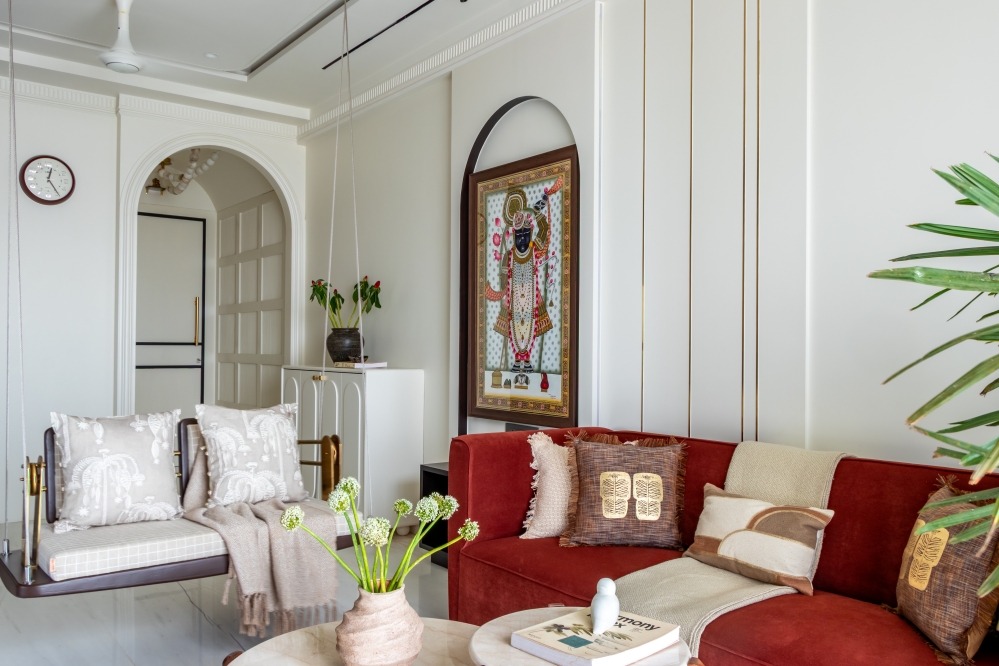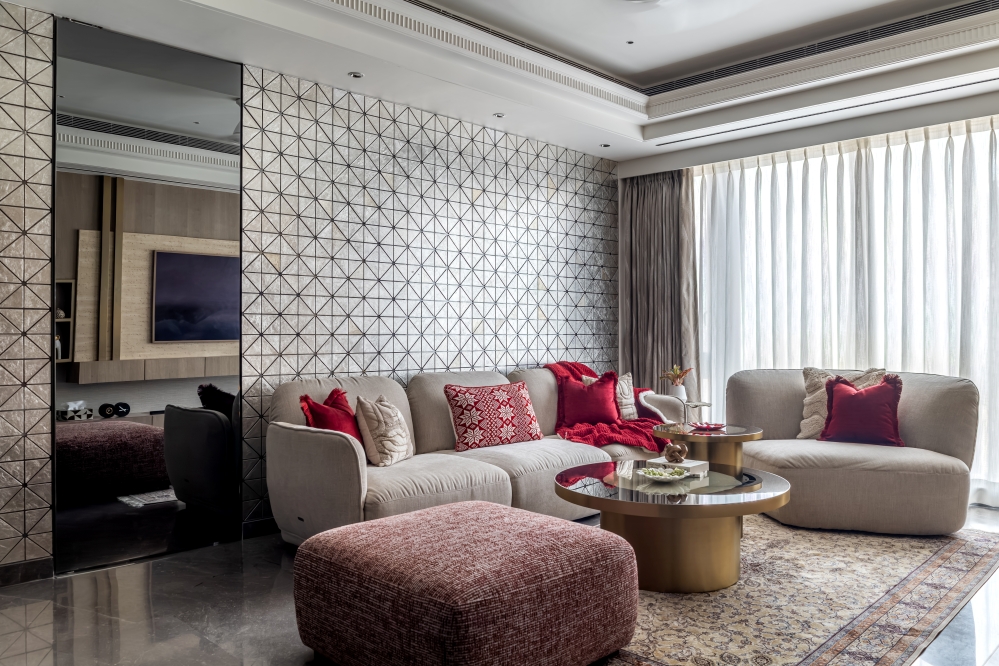
Amara | Makers’ Loft Design Studio | Shibumi Design Studio | Mumbai
Conceived as a quiet retreat within the density of urban Mumbai, Amara explores a softer interpretation of contemporary minimalism — one rooted in emotional clarity, tactile warmth, and the rituals of everyday living. Drawing from the restraint of Japandi aesthetics and the enduring familiarity of mid-century modern interiors, the residence unfolds through layered neutrals, warm timber tones, sculptural lighting, and carefully edited spatial gestures. Rather than relying on overt visual statements, the project prioritises atmosphere: filtered light, nuanced textures, and subtle artistic references create interiors that feel calm, intimate, and deeply lived-in. Across the home, functionality dissolves quietly into the architecture, allowing permanence and softness to coexist with quiet precision.
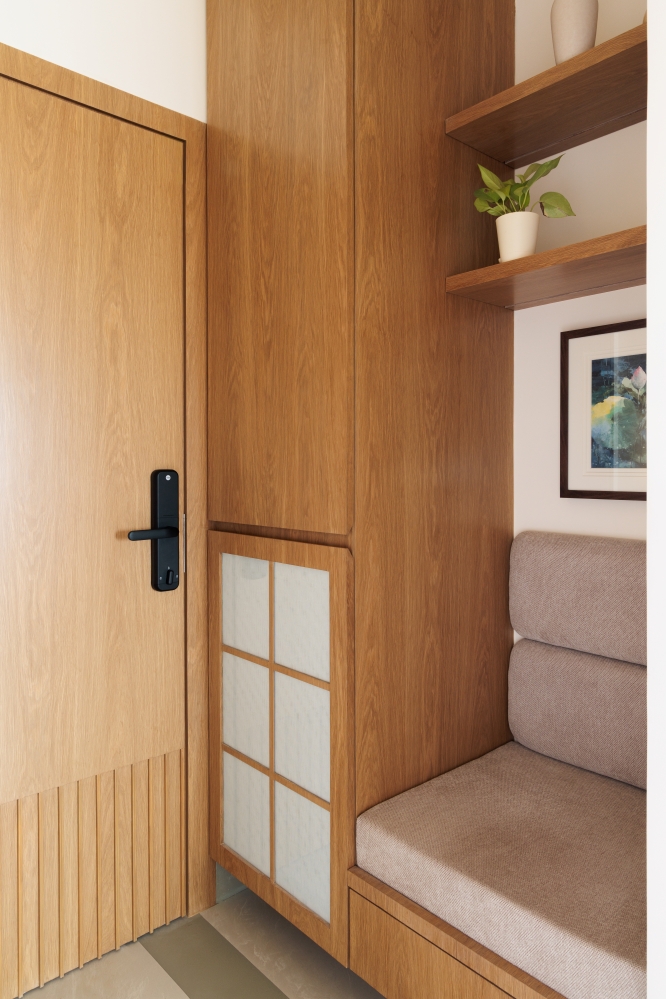
Amara was conceived as a quiet counterpoint to the pace of contemporary urban life — a home shaped not by excess, but by emotional clarity and permanence. Drawing from the restraint of Japandi minimalism and the warmth associated with mid-century modern interiors, the residence unfolds through a series of spaces that feel tactile, intimate, and deeply attuned to everyday rituals. Rather than pursuing a stark interpretation of minimalism, the design embraces softness through layered neutrals, warm timber tones, textured fabrics, and sculptural lighting, allowing atmosphere to emerge gradually and without insistence.
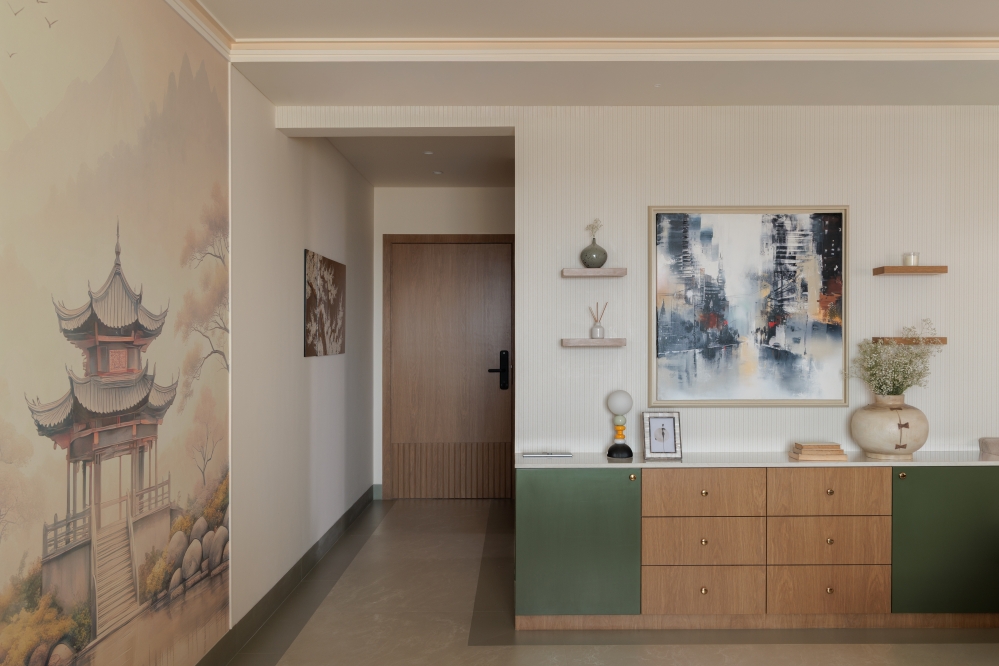
Japanese artistic references appear throughout the home with subtlety and restraint. Landscape murals, hand-painted surfaces, and carefully framed visual moments introduce a sense of memory and quiet narrative, lending the interiors an almost cinematic stillness. These gestures not dominating the Shell, sit gently within it, creating spaces that reveal themselves slowly over time.
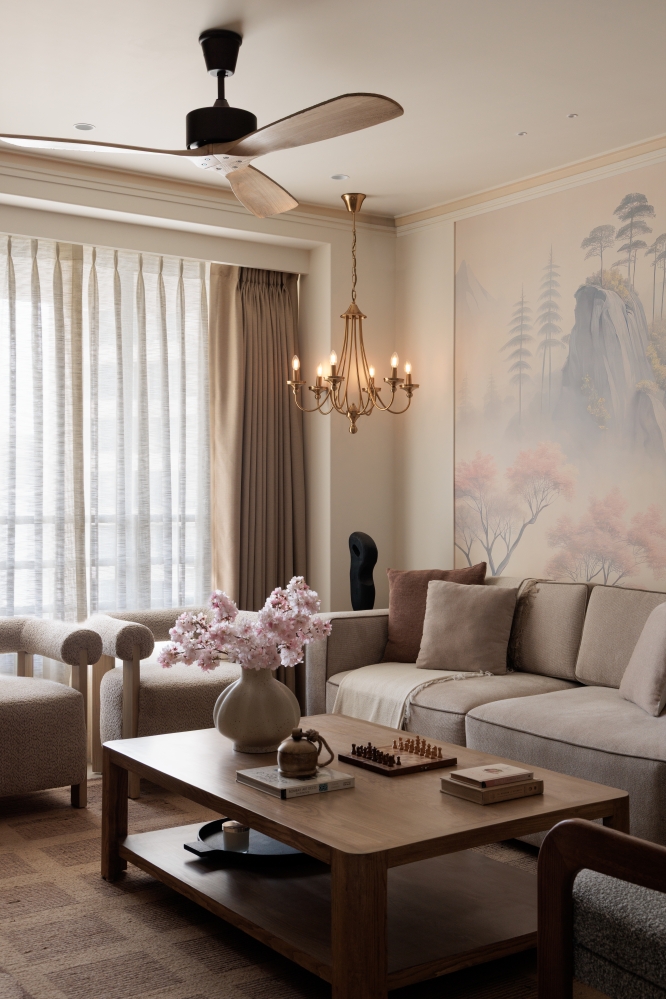
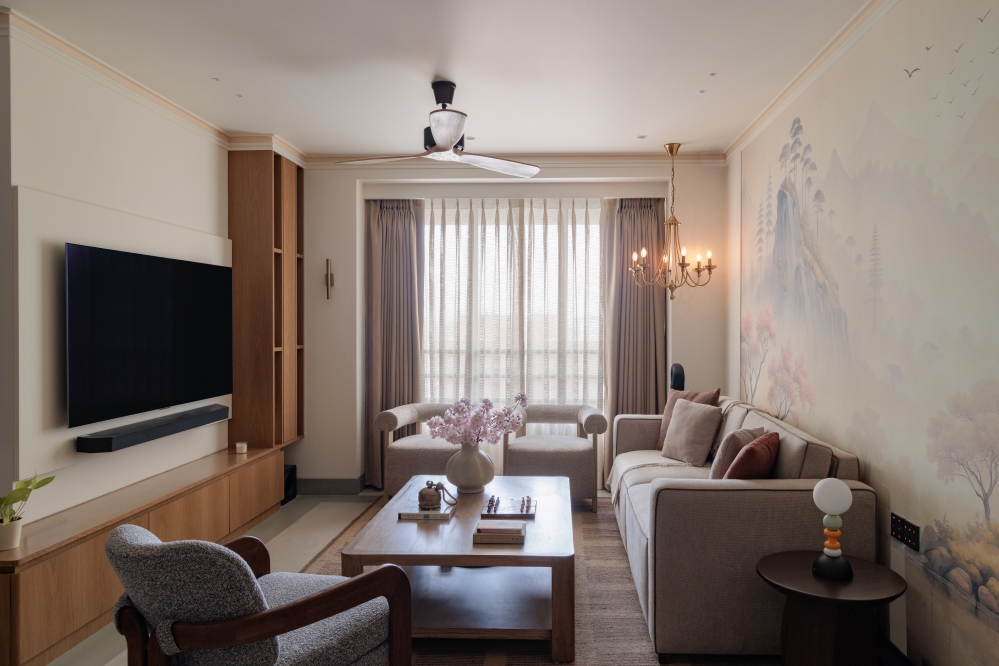
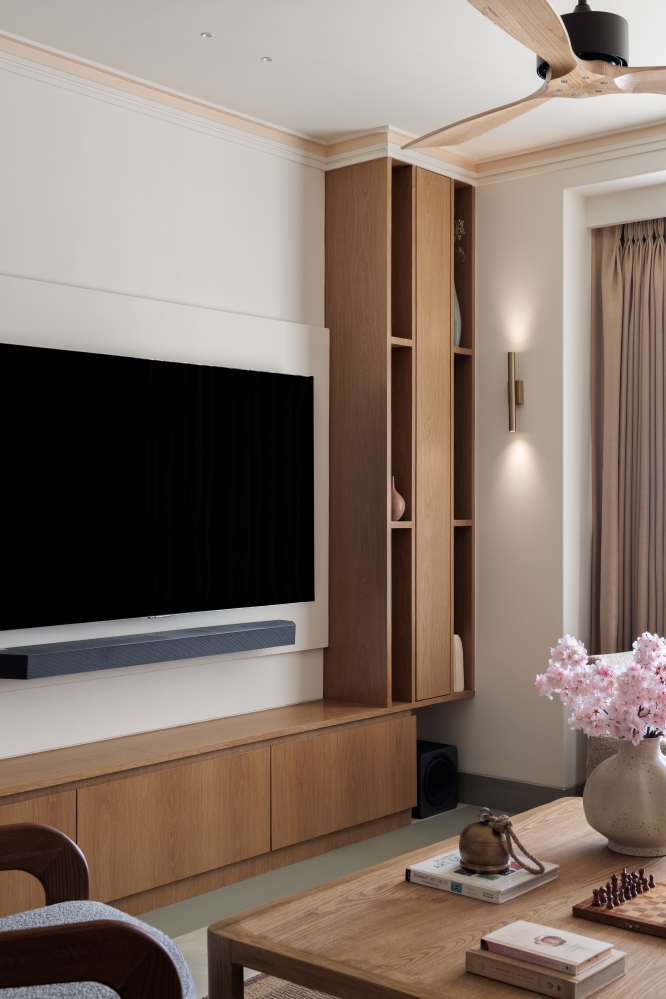
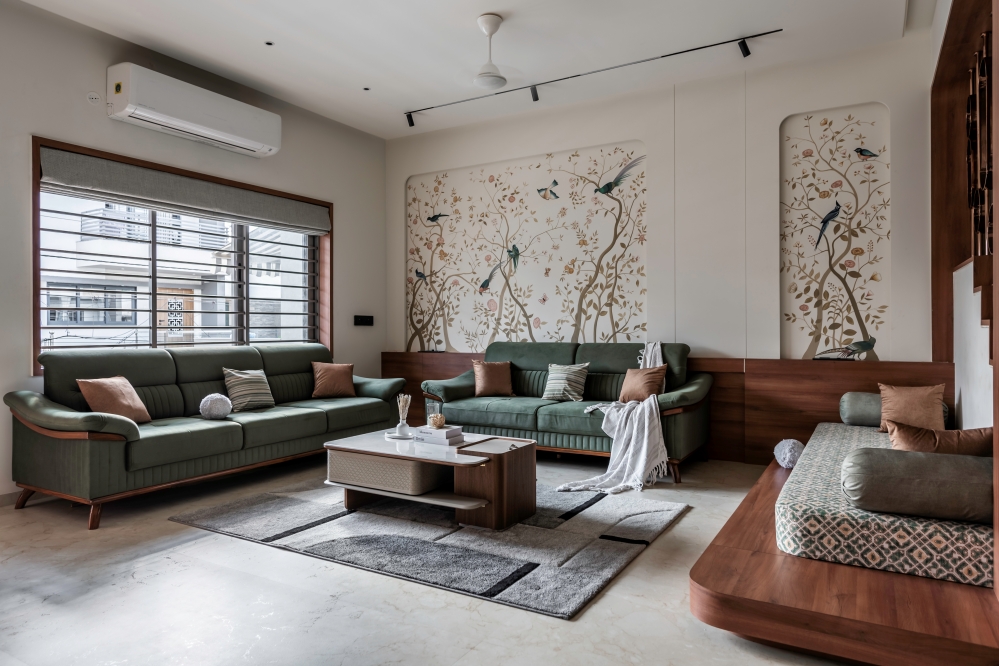
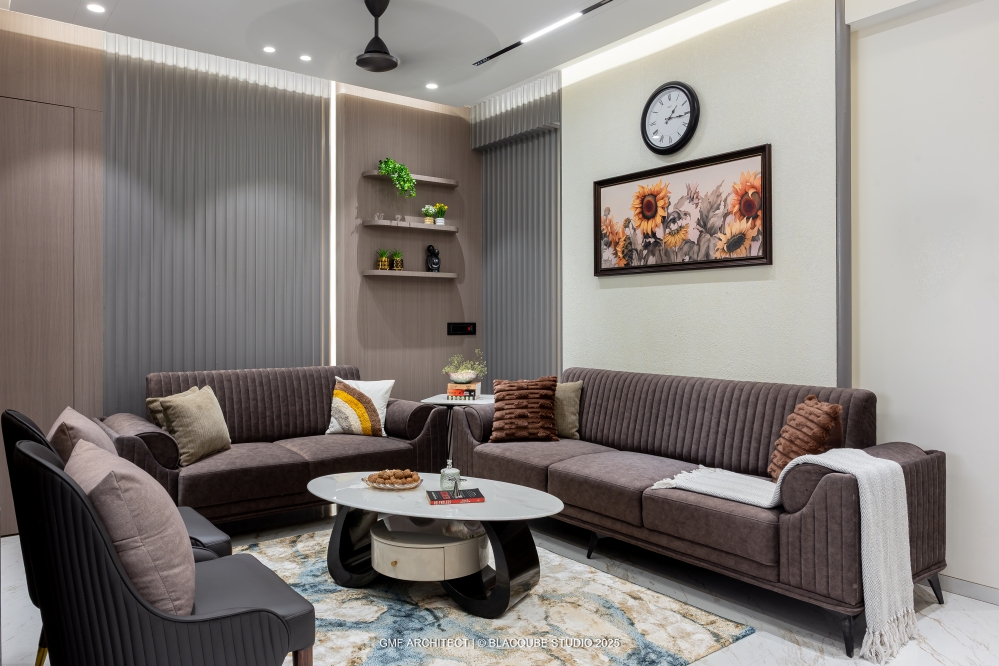
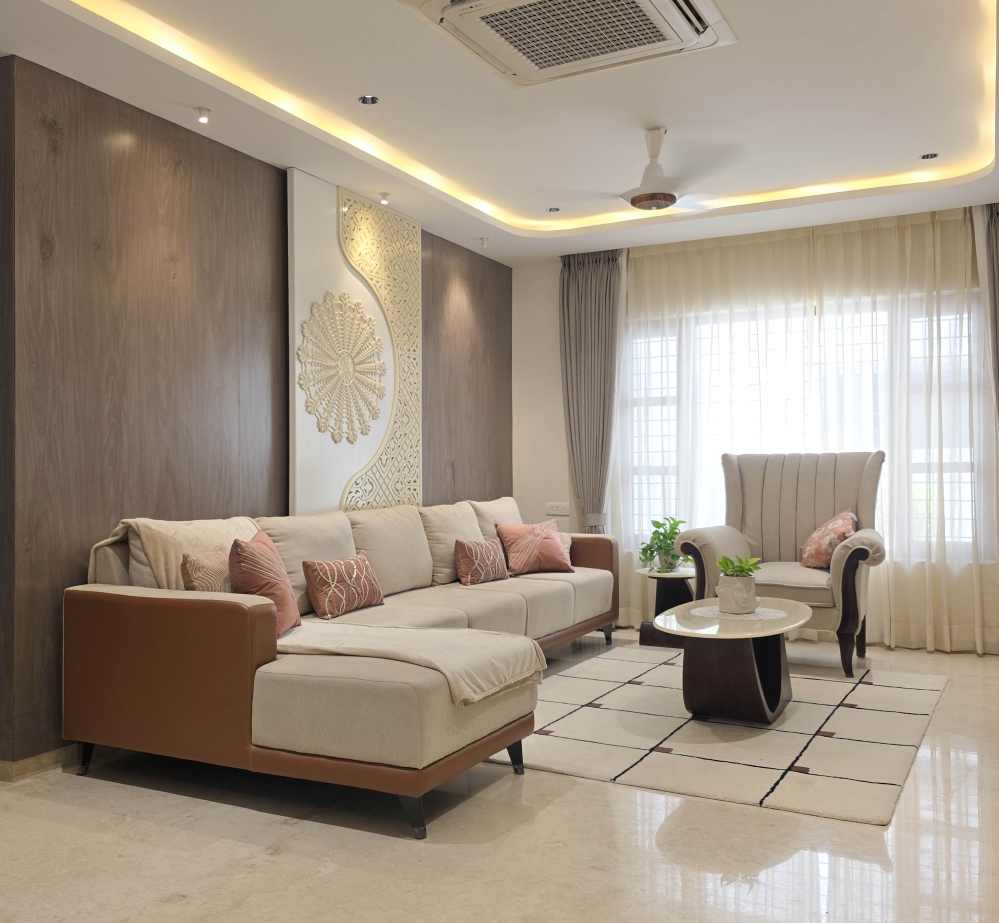
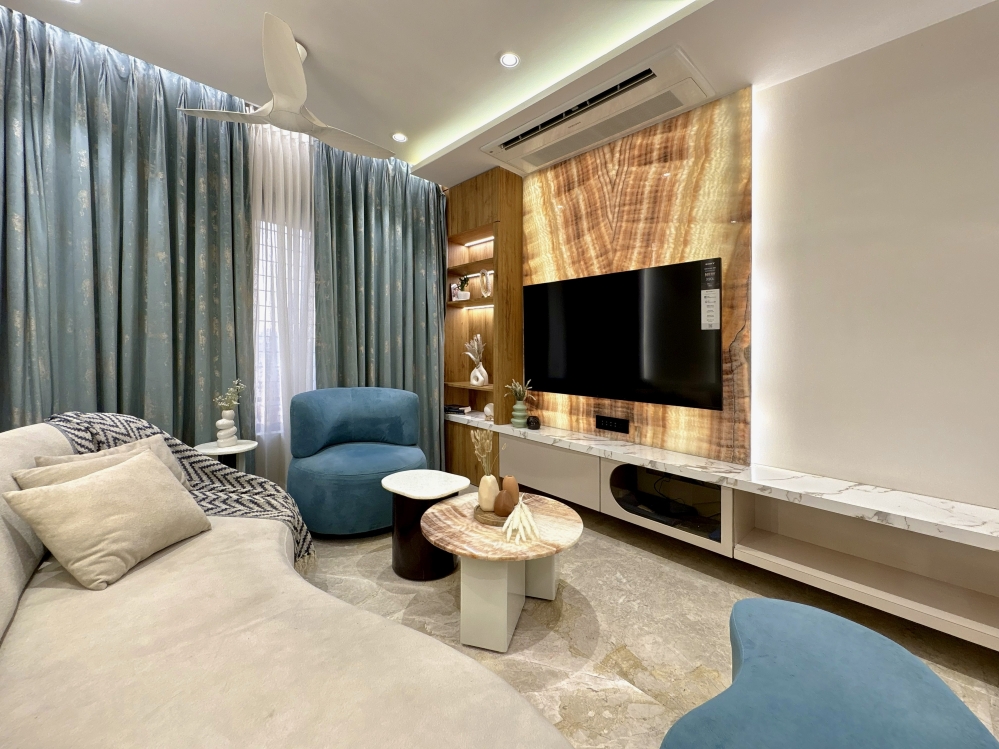
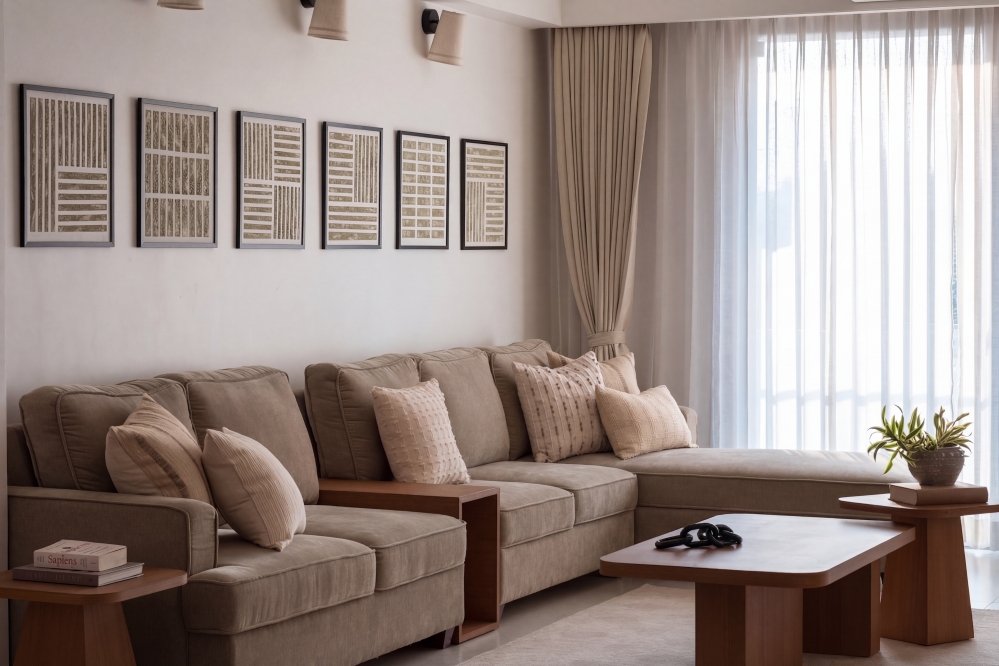
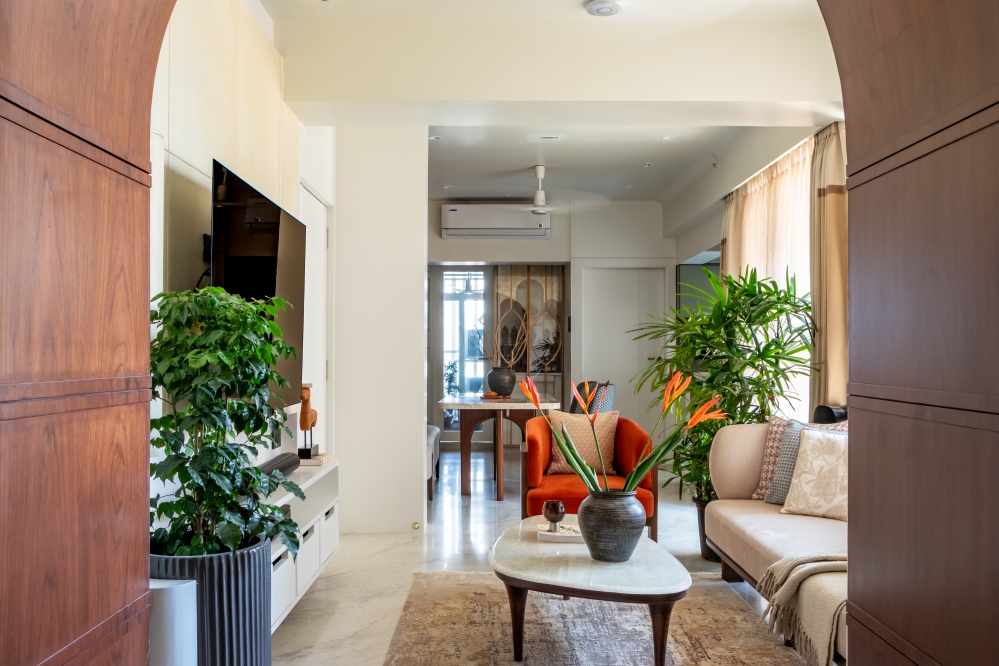
The living and dining areas form the emotional centre of the residence, conceived as a fluid environment for gathering, conversation, and pause. Warm timber surfaces, muted upholstery, and soft natural light establish a calm visual rhythm, while sculptural lighting and mid-century inspired forms lend a quiet graphic clarity to the interiors. Anchoring the living room is a large-scale Japanese landscape mural whose ethereal presence introduces depth without overwhelming the restrained material palette. Along the ceiling periphery, a finely detailed border discreetly conceals the cassette air-conditioning system, allowing technical functionality to dissolve seamlessly into the architecture.
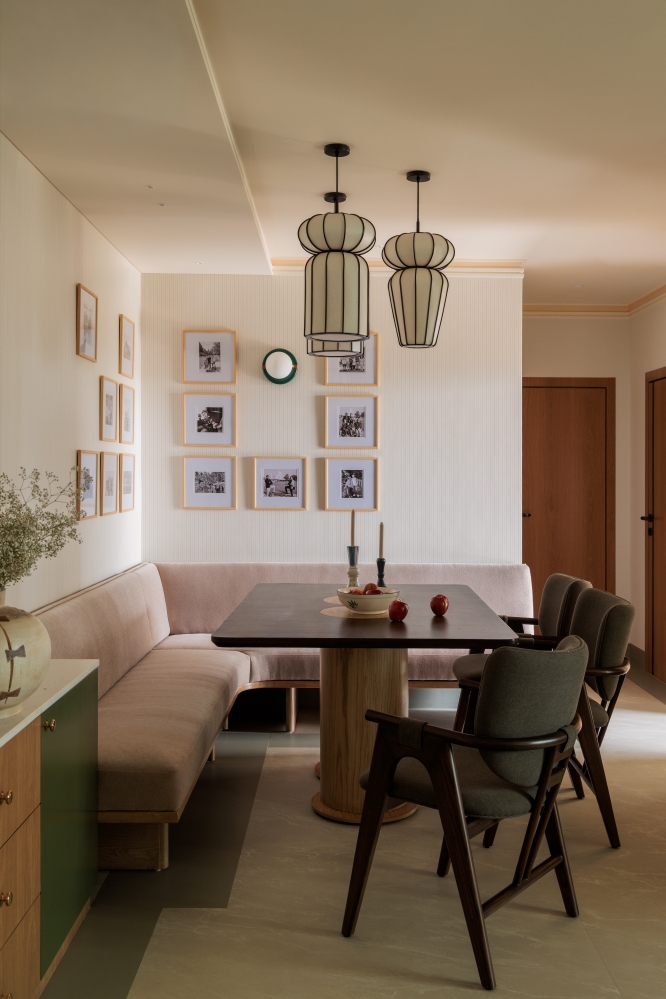
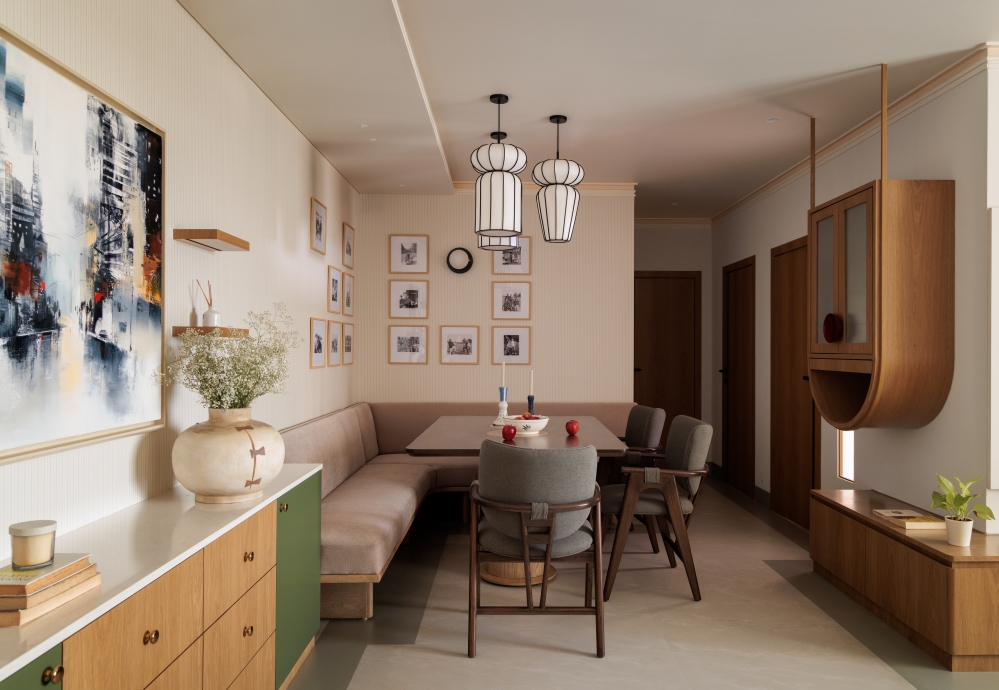
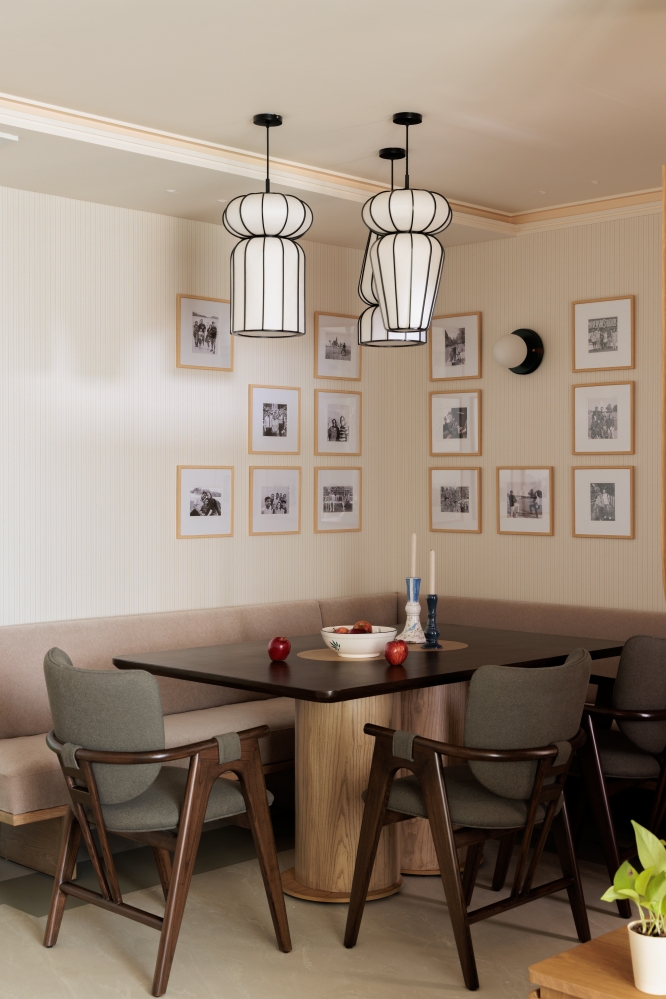
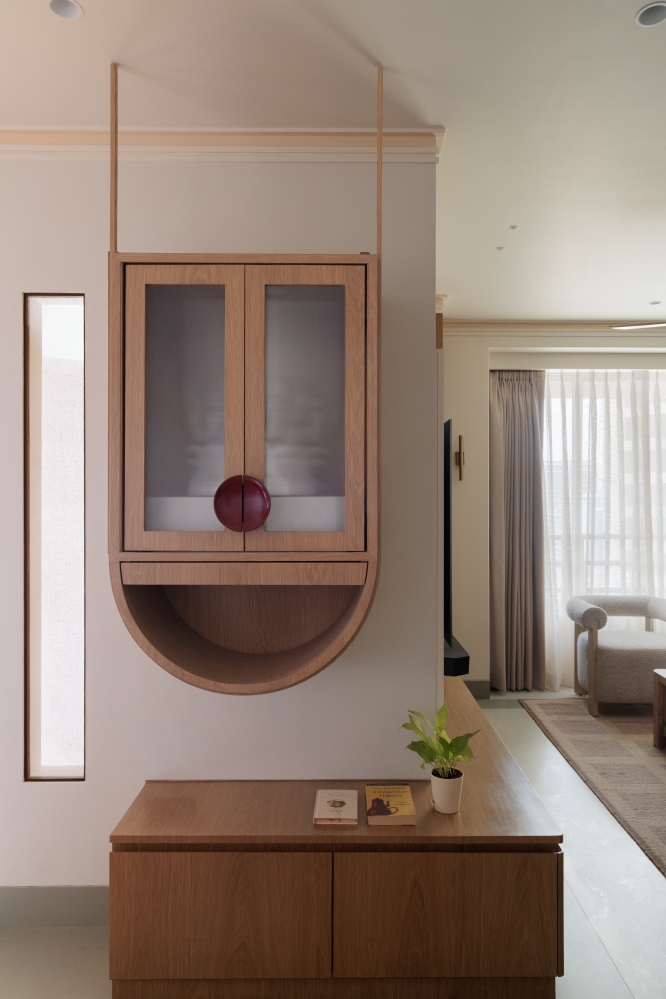
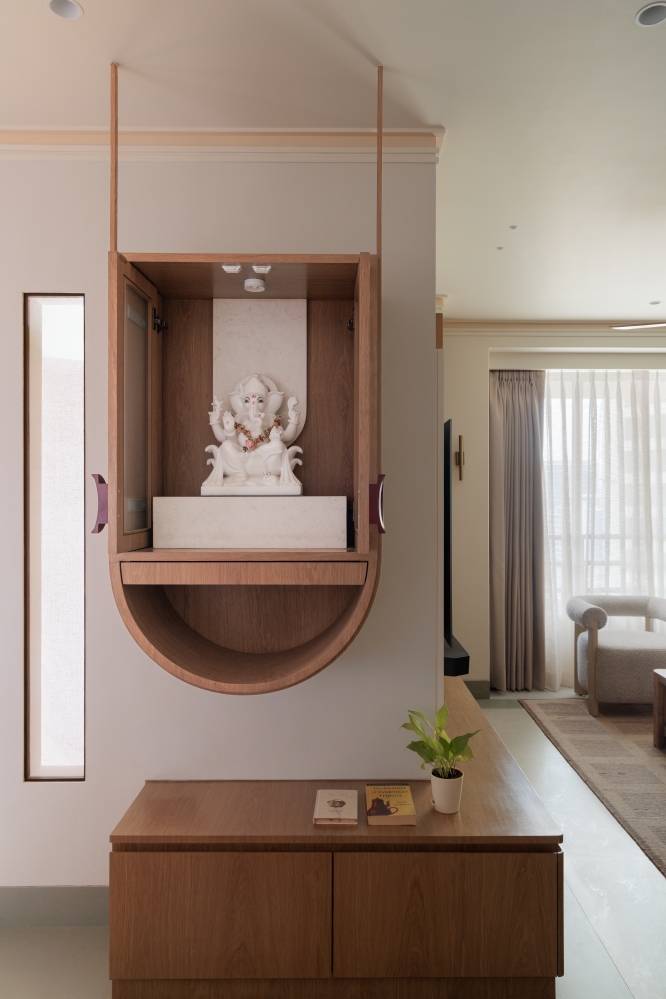
Positioned between the living and dining spaces, the mandir becomes one of the home’s most thoughtful insertions. Integrated into the larger spatial language rather than treated as a separate object, its quiet presence is punctuated by a singular deep red circular handle — a subtle contemporary gesture that gently signals the sacred within the rhythms of daily life. Nearby, the dining area prioritises intimacy over formality, with built-in seating, layered lighting, and an L-shaped striped wallpaper backdrop framing an evolving arrangement of family photographs. The composition functions less as display and more as a living archive woven naturally into the home.
The kitchen was conceived as a highly functional yet visually restrained space, where texture becomes the defining design element. Fluted PU-finished overhead shutters introduce rhythm and softness to the otherwise linear composition, while the lower laminate cabinetry grounds the space in warmth and durability.
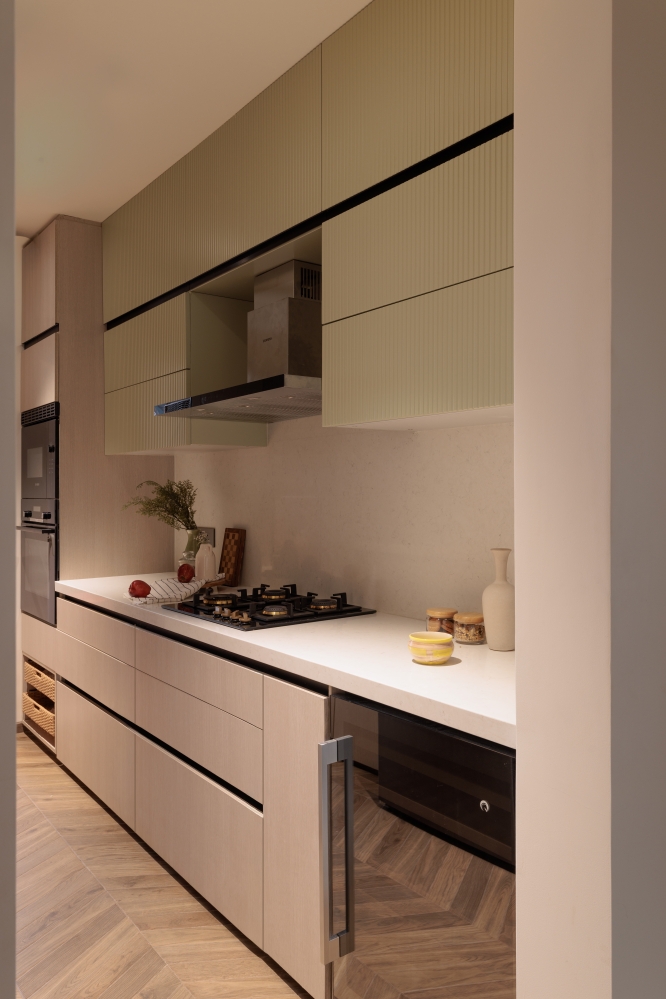
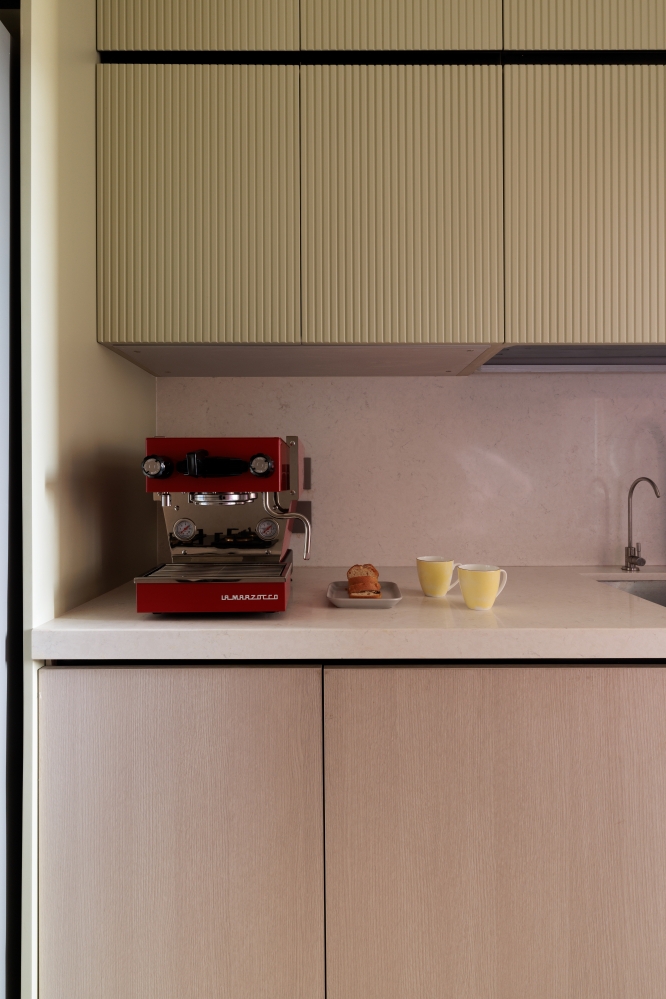
A muted material palette, seamless quartz countertop, and integrated profile handles allow the kitchen to feel clean and uncluttered, reinforcing its modular efficiency. Black detailing within the channels and hardware adds contrast and precision, while the herringbone flooring subtly extends the home’s larger material language into the space.
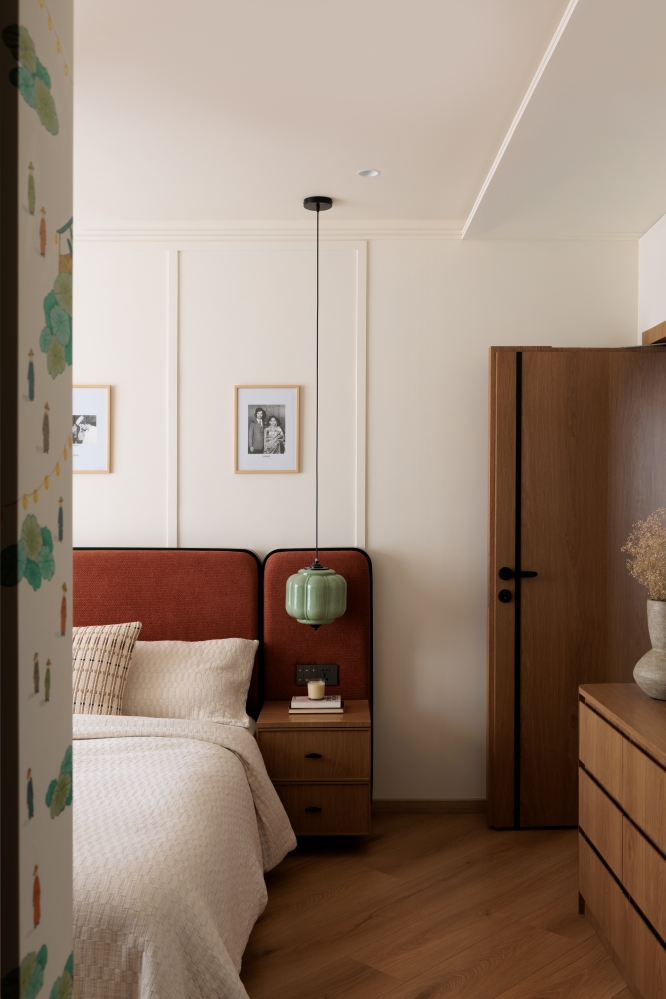
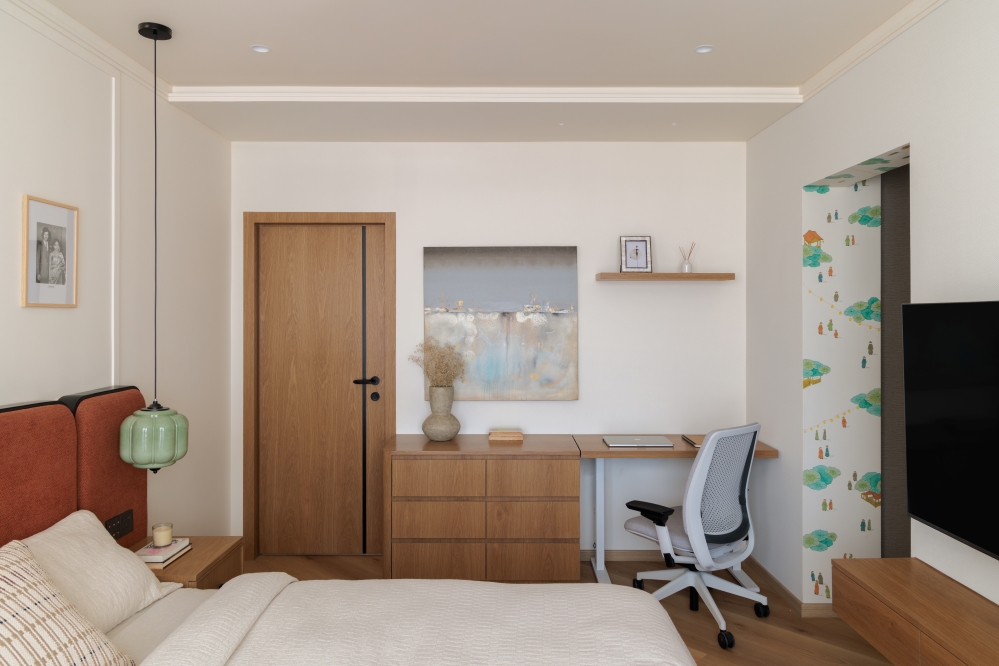
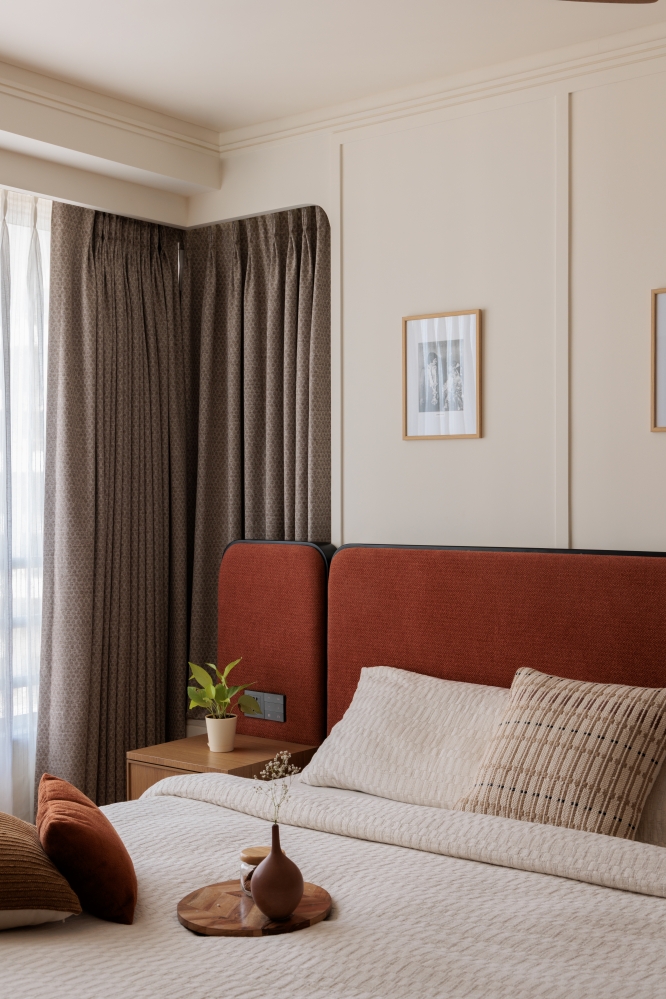
The master bedroom continues this language of restraint and emotional ease. Layered neutrals, tactile upholstery, and warm timber detailing create a space that feels restorative without becoming sparse. Decorative pendant lights introduce sculptural softness, while ambient lighting shifts delicately from functional brightness during the day to a quieter, more contemplative mood by evening.
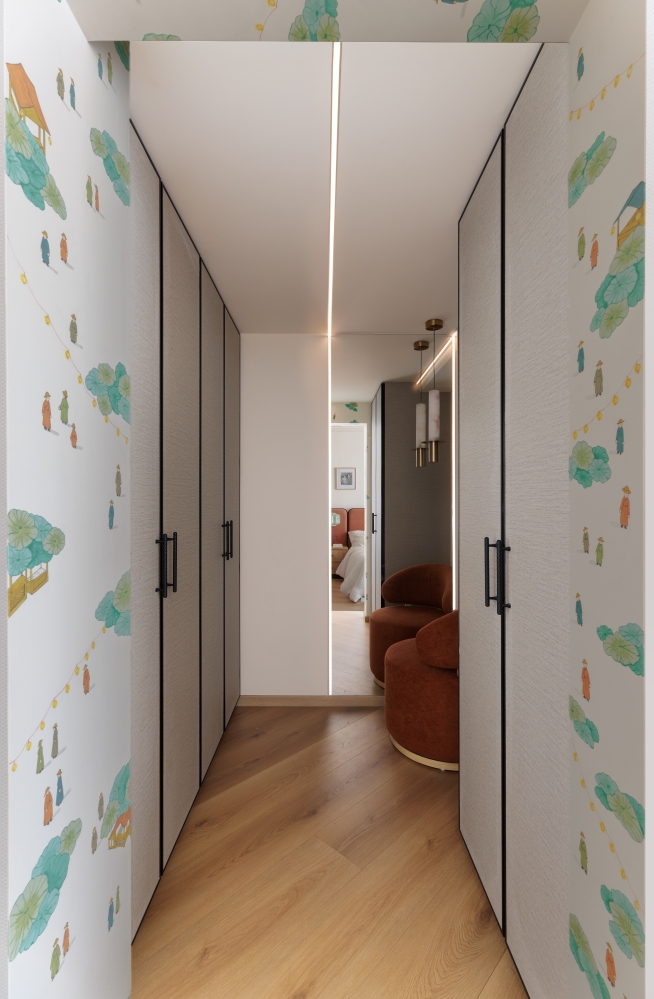
At the entryway of the walk-in wardrobe, a hand-painted wall mural, inspired by a Japanese night market introduces a fleeting narrative quality, balanced by raw silk laminate shutters selected for both tactile richness and practicality. Elsewhere, subtle architectural interventions — including a continuous wall-to-ceiling profile light — preserve spatial height while resolving illumination with precision and clarity.
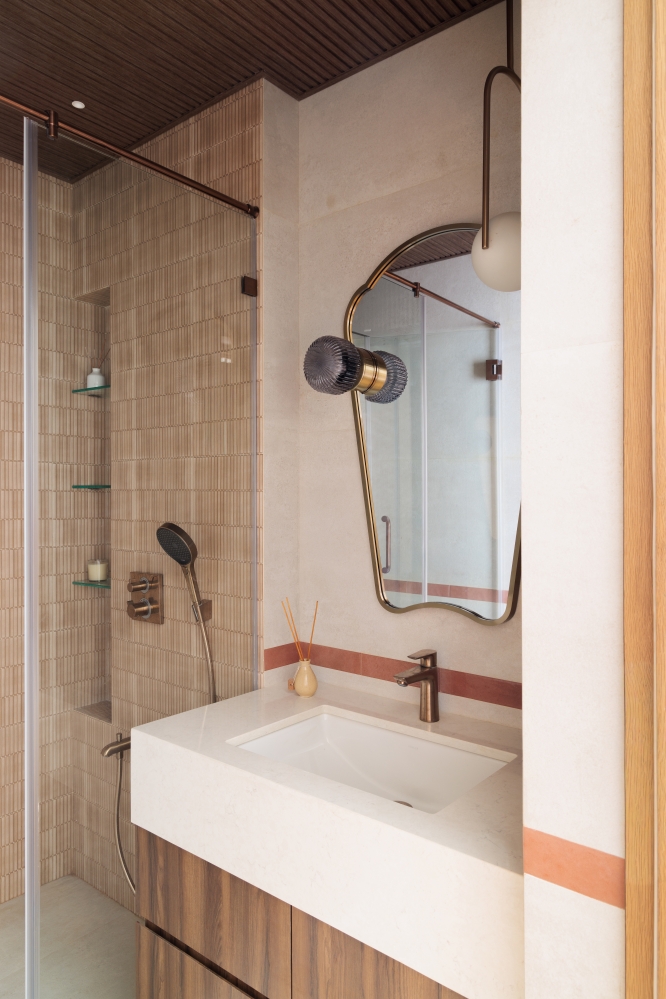
The bathrooms were approached as compact yet highly articulated spaces, where material detailing becomes the primary design language. In the master bathroom, a rust-toned border frames the space with subtle contrast, while vertically stacked kitkat tiles and a printed floor inlay introduce texture and visual rhythm against the warmth of the timber ceiling.
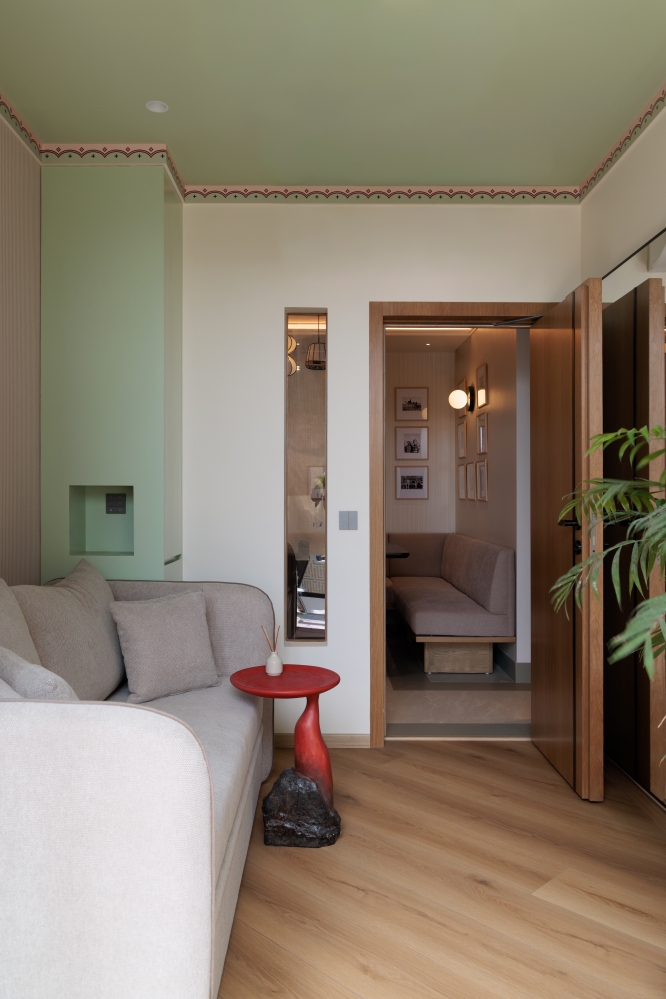
The den bedroom was conceived as a quieter counterpoint within the home — a space shaped less by function and more by emotional cadence. Designed as a retreat for reading, reflection, and temporary withdrawal from digital overstimulation, the room embraces softness through muted textures, rounded forms, and a deliberately restrained palette. A sage green ceiling introduces an unexpected yet calming layer of colour, framed by a custom wallpaper border that lends the room a subtle playfulness without disrupting its composure. Decorative wall lighting and sculptural accents punctuate the otherwise minimal envelope, bringing warmth and visual rhythm to the space.
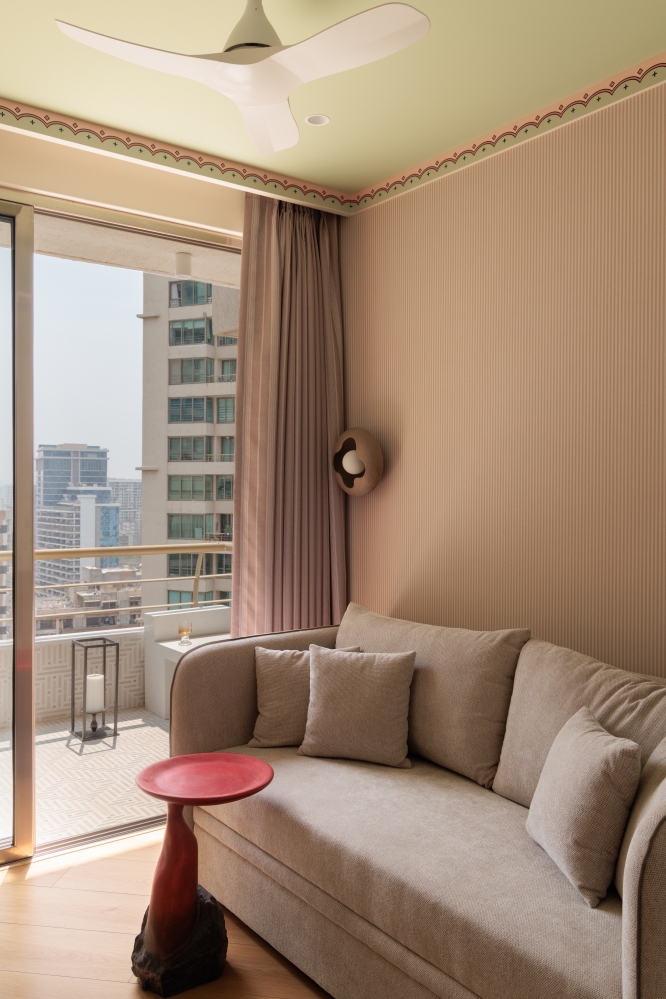
One of the room’s more thoughtful architectural gestures is the slender glass slit inserted within the wall — a quiet intervention that establishes visual continuity between internal spaces while allowing daylight to travel deeper into the home. This interplay of openness and enclosure gives the room a gentle sense of connection while preserving its contemplative character. Textural upholstery, soft drapery, and tactile surfaces create an atmosphere that feels restorative rather than styled. At the same time, the space transitions effortlessly into a guest bedroom when required, balancing retreat and hospitality with quiet ease.
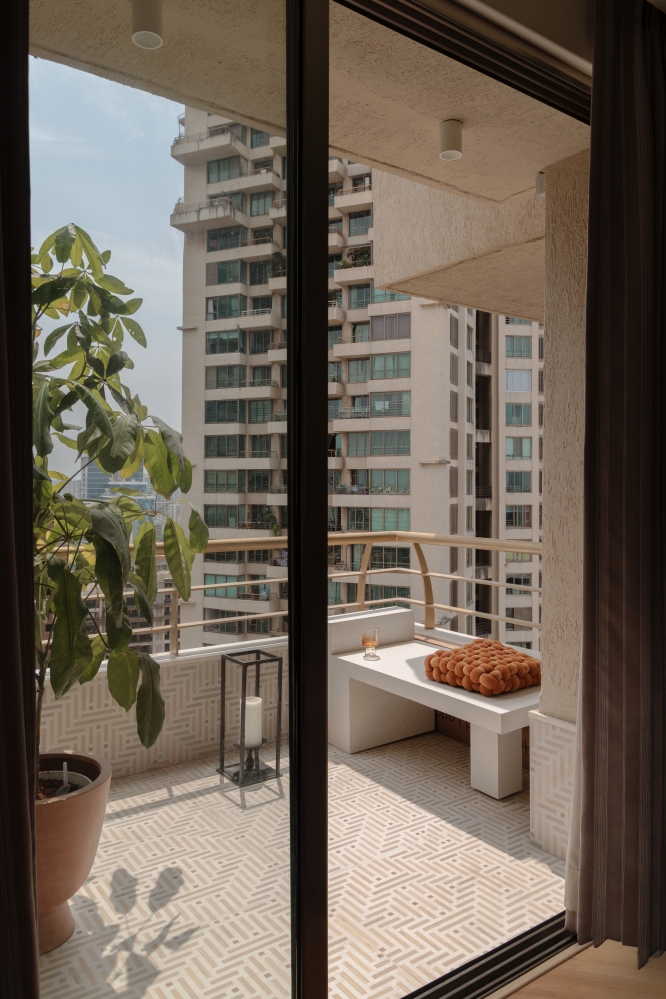
Extending from the den, the balcony was conceived less as an outdoor appendage and more as a natural continuation of the interior architecture. Geometric tiling flows seamlessly from floor to wall, creating a quiet sense of continuity and visual cohesion within the compact footprint. The built-in bench, cast on site using leftover quartz, introduces an understated material honesty while remaining durable and suited to outdoor living. Framed by softened city views and filtered daylight, the space becomes a gentle pause within the rhythm of urban life.
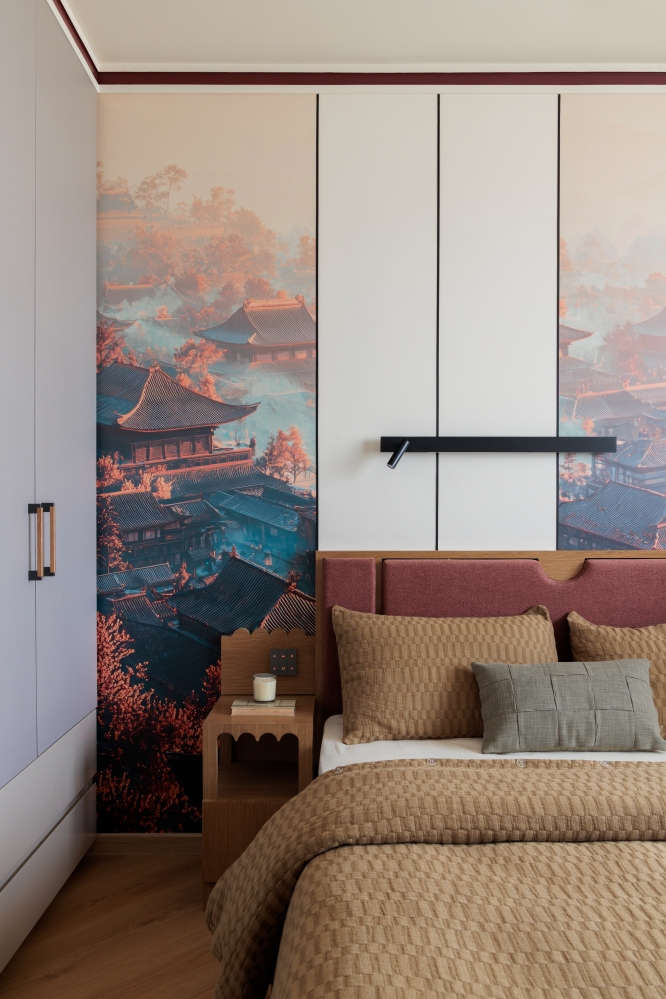
The son’s bedroom introduces a more graphic and spirited expression into the home while remaining anchored to Amara’s larger language of warmth and restraint. Richer tonal contrasts, sculptural forms, and layered textures lend the room a youthful energy that feels considered rather than overtly playful.
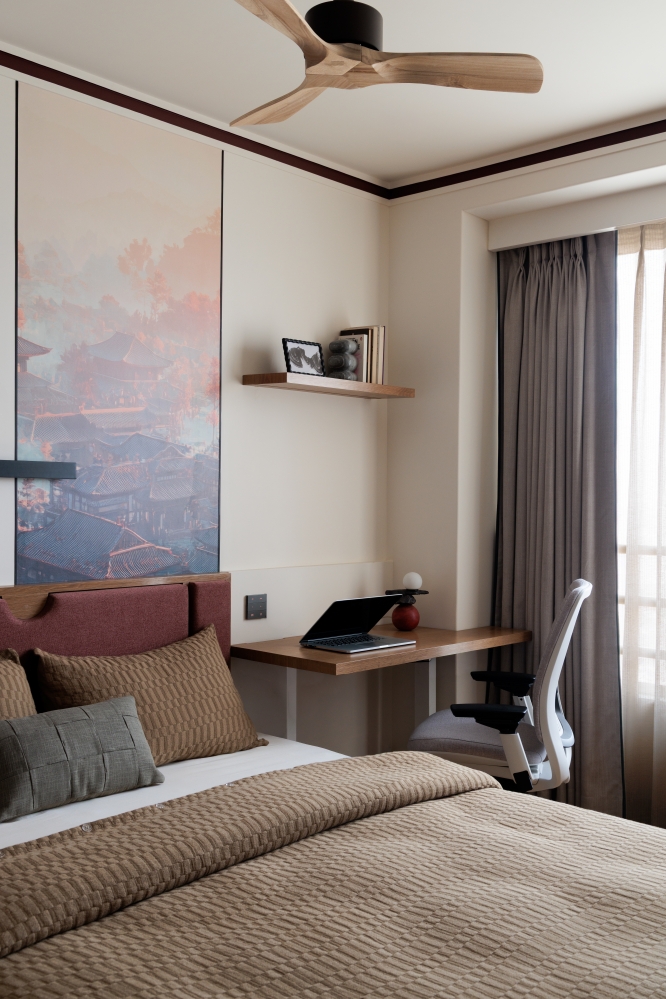
A custom wallpaper inspired by Japanese rooftop landscapes becomes the room’s defining visual gesture, bringing narrative depth and a cinematic quality to the otherwise minimal envelope. This artistic intervention is balanced by clean architectural lines, warm timber surfaces, and thoughtfully detailed upholstery, allowing the space to feel expressive without excess.
The room is layered with subtle moments of functionality and craft. An electronic sit-stand study desk introduces adaptability for evolving routines, while the custom-designed lighting above the bed and within the seating corner has been carefully developed to respond precisely to the room’s spatial needs. Even smaller details — such as the contrasting piping along the curtains — contribute to the sense of intentionality woven throughout the space.
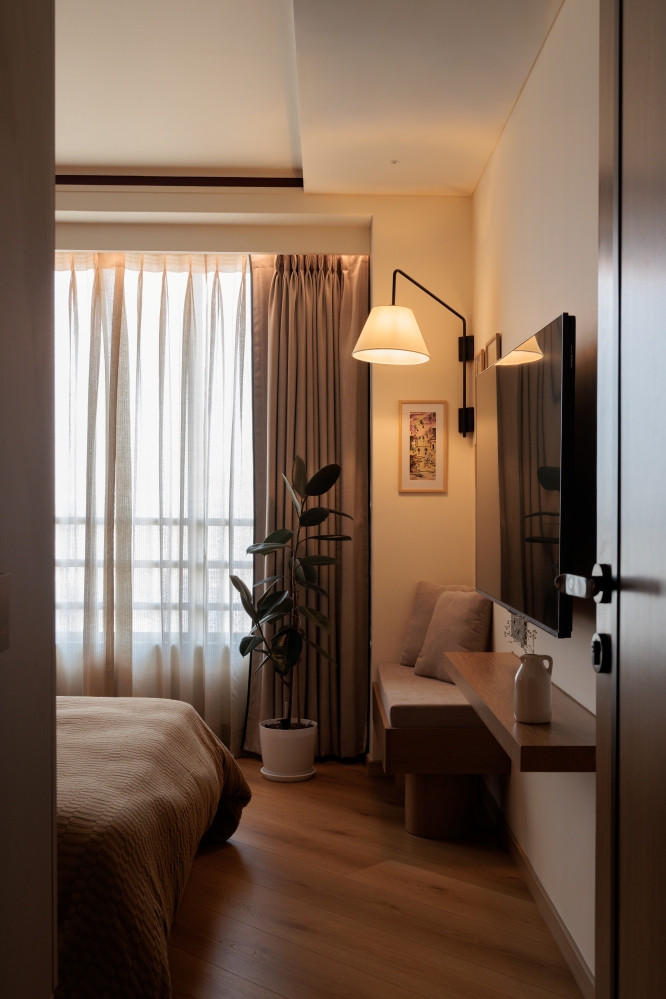
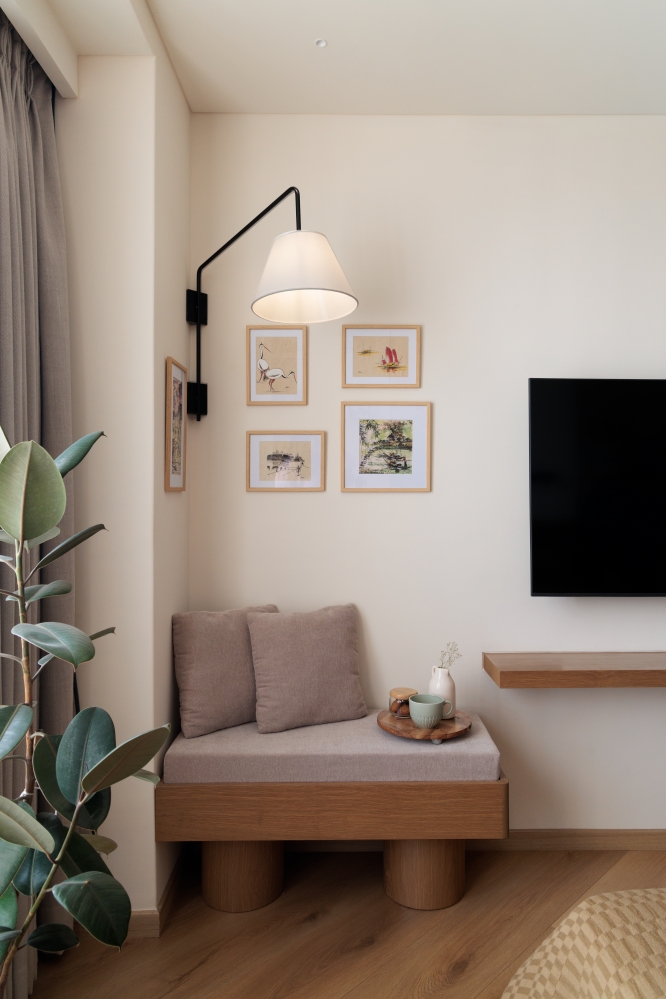
Within the compact footprint, a built-in seating nook and the playful sculptural bedside table introduce softness and dimension, ensuring the room feels both grounded and inviting. The result is a space that balances youthful character with longevity — refined enough to mature gracefully over time while still retaining a distinct sense of personality.
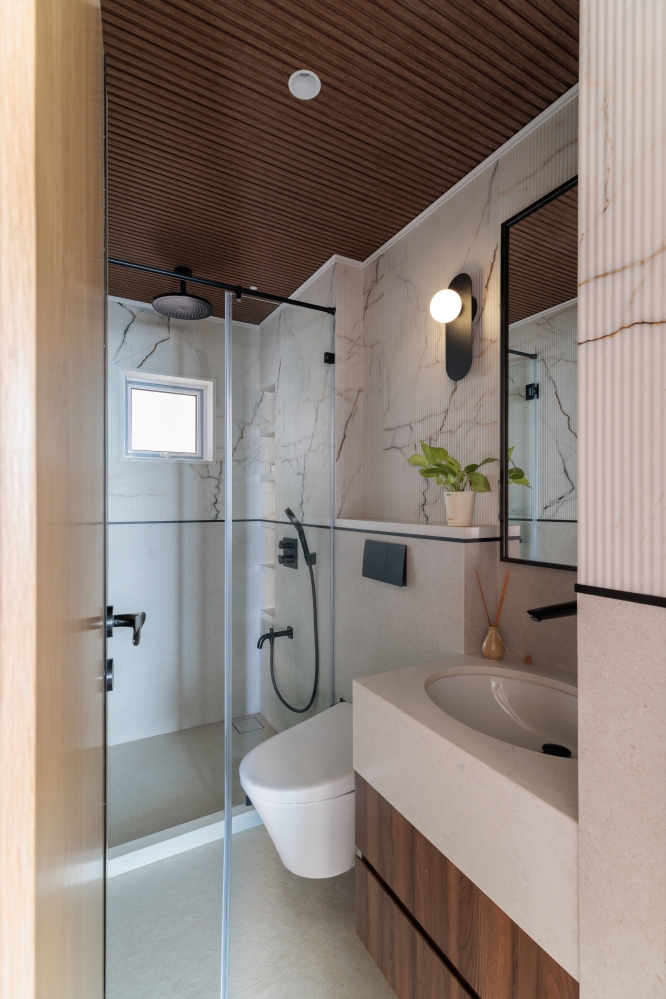
The guest bathroom follows a refined half-and-half composition, balancing fluted and plain tiled surfaces to create depth through restraint. A slim metal T-patti insert is used as a precise transition detail, elegantly concealing the junction between the two finishes while adding a subtle layer of craftsmanship and definition.
Interior Lover team’s view on the project
Defined by quiet elegance and thoughtful design, Amara is a 1,000 sq. ft. residence at Oberoi Springs, Andheri West, Mumbai, designed and styled by Makers’ Loft Design Studio led by Snehal Punamiya, with collaborative support from Shibumi Design Studio. The home presents a sophisticated interpretation of contemporary living, where warmth, craftsmanship, and carefully curated details come together to create an environment of lasting comfort and refinement. A carefully layered palette of soft neutrals, natural timber finishes, tactile surfaces, and sculptural lighting establishes a sense of visual harmony throughout the interiors.
Subtle artistic influences inspired by Japanese culture introduce depth and character, lending the home a quiet narrative that unfolds gracefully across the space. Thoughtfully selected materials and bespoke details create richness through texture, proportion, and material expression. Functionality is seamlessly integrated within the architectural language, allowing the interiors to feel composed and effortless. Custom-crafted elements, refined detailing, and a balanced material palette contribute to an atmosphere that feels personal, timeless, and welcoming. The result is a residence where contemporary sophistication is expressed through simplicity, creating a home that feels enduring, graceful, and deeply connected to everyday living.
FACT FILE
Project Name: Amara
Design Firm : Makers’ Loft Design Studio | Shibumi Design Studio
Principal Designer : Snehal Punamiya
Project Area: 1000 sq. ft.
Project Location: Oberoi Springs , Andheri West, Mumbai
Project Duration: 8 months
Year of Completion : 2026
Photography Credits: Wabi Sabi Studios
Other Credits
Decorative Lights: Length breadth height, house of things, nameplaceanimalthing, Vlights, Rosha India, Ikea, Leidenschaft studio
Loose Furniture: The Rocking Chair, Sarita Handa, Leidenschaft studio
Automation: AHA!
Rug: Rugberry
Styling Pieces: Potterybarn and Westlem
Custom Wallpapers : Finesse Decore
Fabrics and Wallpapers: Rdecorchy